Cycling Biomechanical Study
Find your optimal position on the bike. More power, more comfort, fewer injuries.
What it is
Your ideal position, backed by data
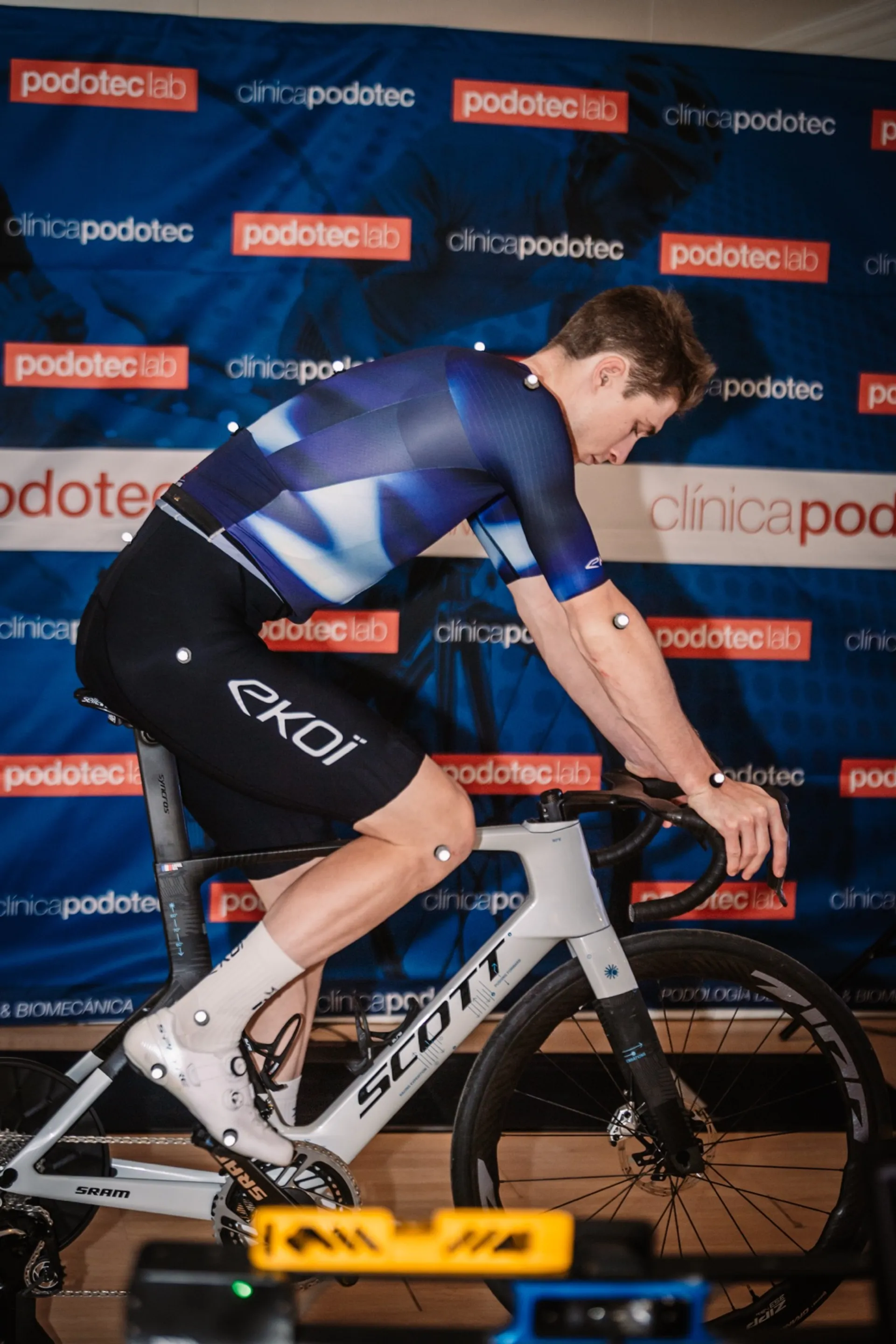
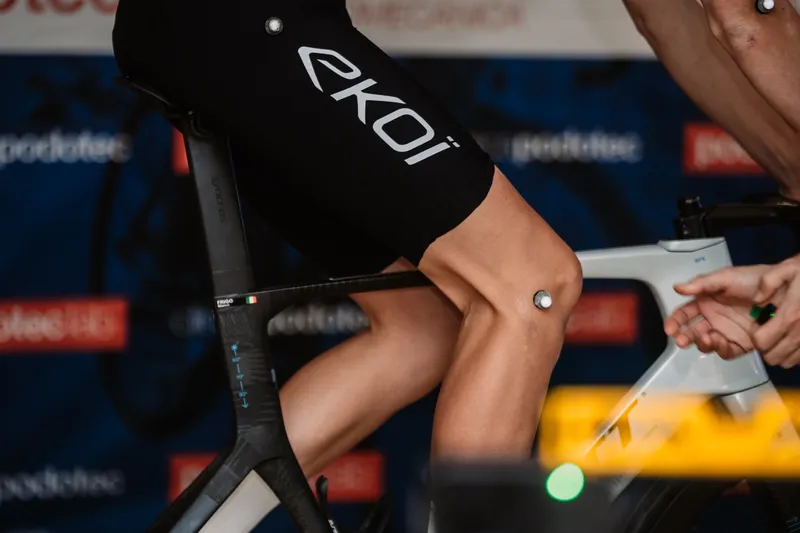
A biomechanical study analyses how your body interacts with the bike while pedalling. We use 3D motion capture technology to measure angles, ranges of motion and pedalling patterns in real time.
The goal is to find the position that allows you to:
- Generate more power with the same effort
- Eliminate pain in knees, back, neck and hands
- Prevent overuse injuries and poor-posture issues
- Enjoy longer rides without discomfort
- Improve control and stability on the bike
Individual approach
There are no magic formulas. Every cyclist has different anatomy, flexibility and goals. That is why we analyse each case individually.
Who it is for
Do you need a biomechanical study?
"Most cycling discomfort comes from poor bike fit. Do not get used to pain: there is a solution."
Protocol
How we perform a biomechanical study
A complete 2-3 hour process to find your optimal position.
Initial interview
We review your history, goals, current discomfort and cycling profile. This information is key to personalise the analysis.
Physical assessment
We evaluate flexibility, joint ranges, possible asymmetries and structural characteristics. These data determine viable positions for your body.
Dynamic analysis
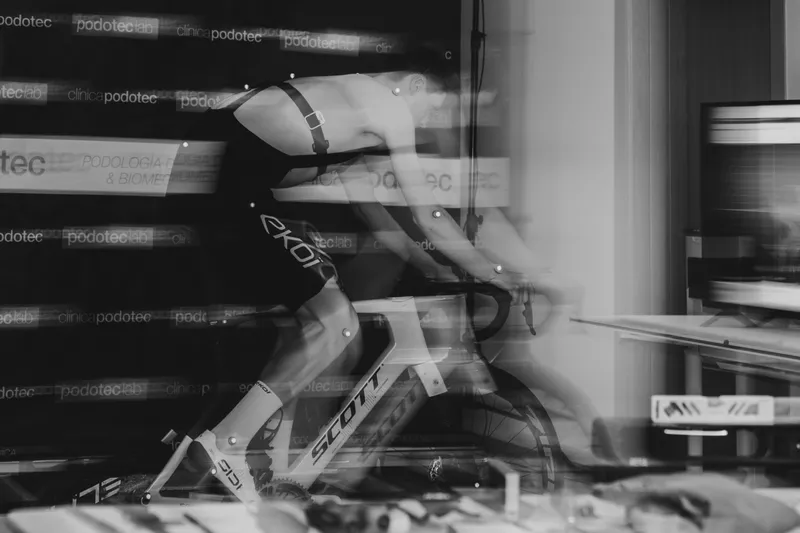
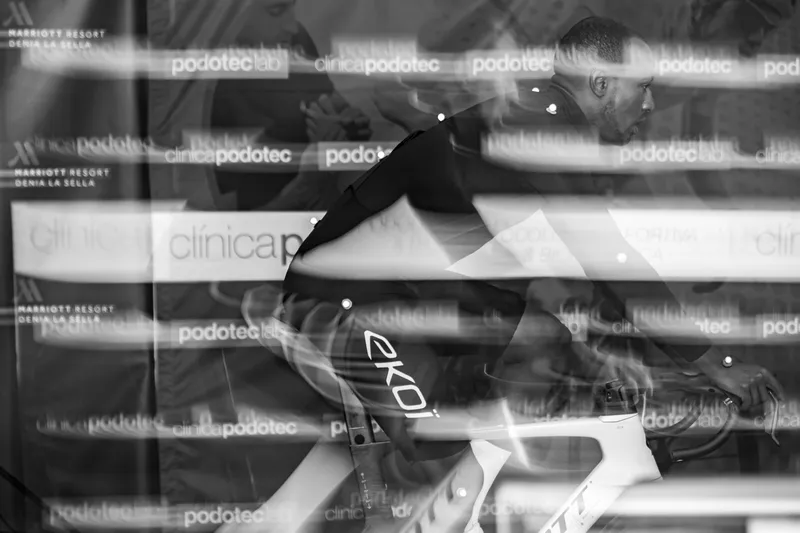
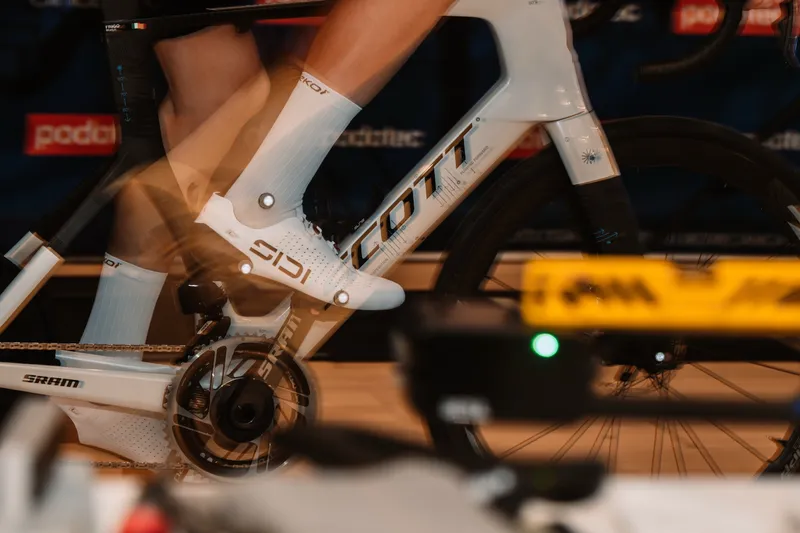
We record you pedalling at different intensities using our STT Systems 3D system. We detect real-time movement patterns behind your issues.
Progressive adjustments
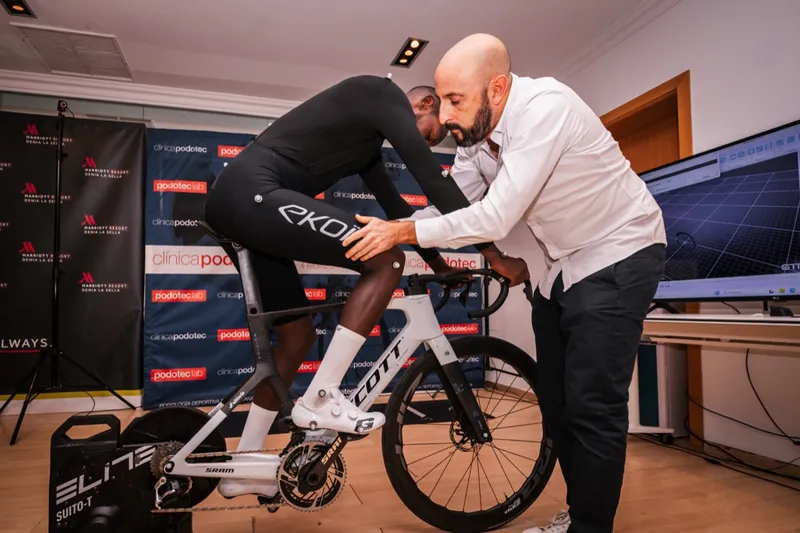
We adjust cleats, saddle and handlebar. After each change we re-record to verify impact, repeating until optimal position is achieved.
Report and follow-up
You receive a report with your bike measurements and recommendations. We remain available for follow-up adjustments if needed.
Technology
Professional analysis technology
We work with STT Systems 3DMA motion capture, the same technology used by high-performance centres and professional teams.
- Measure joint angles with millimetric precision
- Analyse pedalling symmetry
- Detect compensation patterns invisible to the naked eye
- Compare your current position with optimal ranges
- Document before/after changes with objective data
In action
Working with NSN Cycling
A real biomechanical analysis session with NSN Cycling. 3D motion capture technology, real-time adjustments and clinical expertise to find the optimal position for every cyclist.
Teams & cyclists
Our work
FAQ
Frequently asked questions
How long does the study take?
Between 2 and 3 hours depending on case complexity. We invest the necessary time to do it right.
Do I need to bring my bike?
Yes. We work on your own bike so adjustments are directly applicable. If you have several, bring the main one.
Is it useful for MTB, road and triathlon?
Yes. We have experience in all modalities and adapt the protocol to each bike type and position.
When will I notice the changes?
Some cyclists notice improvements immediately. Others need 2-3 weeks of muscular adaptation. We explain what to expect in your case.
Take the next step
Stop adapting to pain
If you have had discomfort for a while or feel you are underperforming, a biomechanical study can be the turning point.